

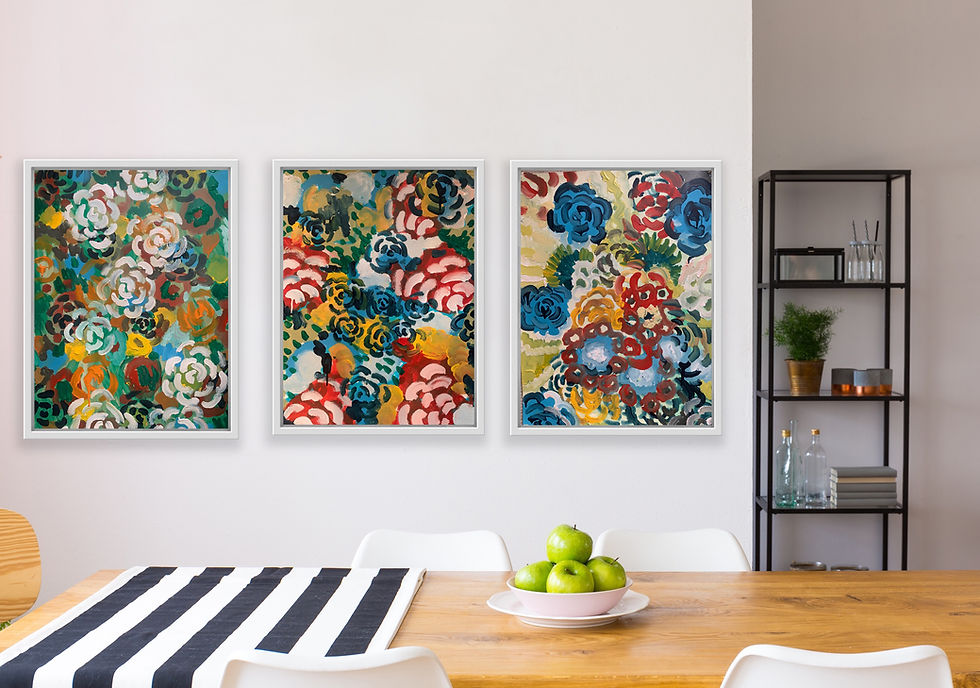


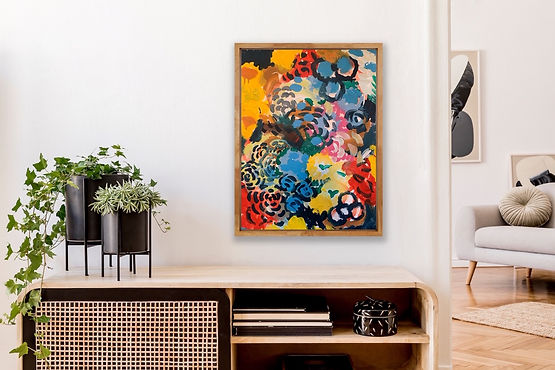
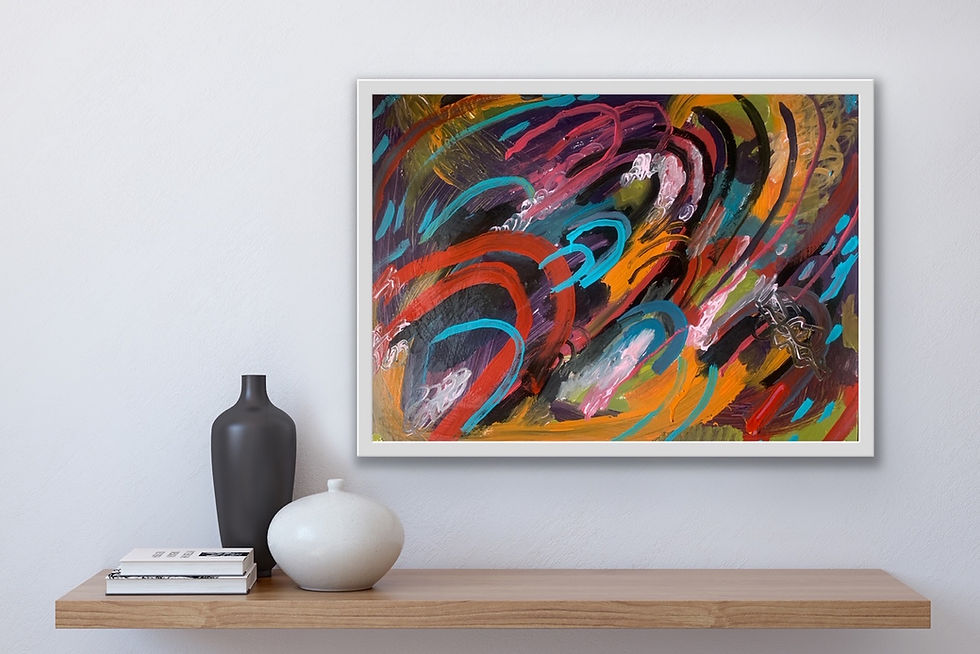

Painting may be one of the last places we can truly stop

Studio time ebbs and flows. Recently, I have been deeply immersed in painting—yet just a month ago, I hadn’t set foot in my studio for weeks. This is the nature of my creative process: it unfolds in phases of looking, seeing, doing, redoing, and refining. Then everything morphs, shifts, and changes as I float in and out of the creative current.
For me, painting is about time and space, flow and change. Integrating creativity into one’s life is essential. This process has grown organically over thirty years of dedicated studio practice. Now, at nearly 54, I am only just beginning to see the true evolution of my ideas—the marks and the passage of time evolving into work that finally feels ready to be shown.
In today's culture, there’s a pervasive problem: a reluctance to let things mature naturally. The pressure of algorithms encourages an endless parade of “fast food” artists, presenting their work as if each piece is a profound achievement. The culture says, “Look at me!” But that’s not my style. If anything, I want to say, “Wait—don’t look at me yet. I’m still working on it myself.”

Brian Riley
work in progress
4-foot by 20-foot acrylic on canvas
2025
My practice is about patience—about allowing the work to ripen in its own time. The studio is a space of transformation, where the rush of modern life gives way to a slower, deeper rhythm. In this way, painting becomes not just an act of making, but a way of living—one that honors the quiet evolution of both the artist and the art.
Mature art asks for time, risk, and depth—a willingness to wrestle with the unknown, to question and refine until something genuine emerges. In contrast, much of what passes for painting today is little more than illustration or a fleeting gesture, created for quick consumption in an endless feed. But art that endures—art that matters—requires us to move beyond the surface. It asks us to slow down, to nurture the work, and to value maturity over immediacy.
In an era where technology and image-making have become nearly indistinguishable, painting may be one of the last places we can truly stop, slow down, and allow for the contemplation of real space and time. This return to a more deliberate pace—a space where ideas can mature and evolve naturally—may be a gift that only art can still offer. Let us move past the era of fast food painting and return to a practice rooted in patience, skill, and the authentic evolution of vision.


Comments